
Why Work Feels Harder Than It Should: The Hidden Cost of Misalignment, Leadership Behaviour, and Organisational Design

When Work Feels Harder Than It Should
“Everything just feels like hard work at the minute.”
It’s a phrase that is increasingly common across organisations, particularly in high-demand environments.
On the surface, it is often interpreted as a capacity issue. Too much work. Too few people. Not enough time.
But this interpretation only scratches the surface.
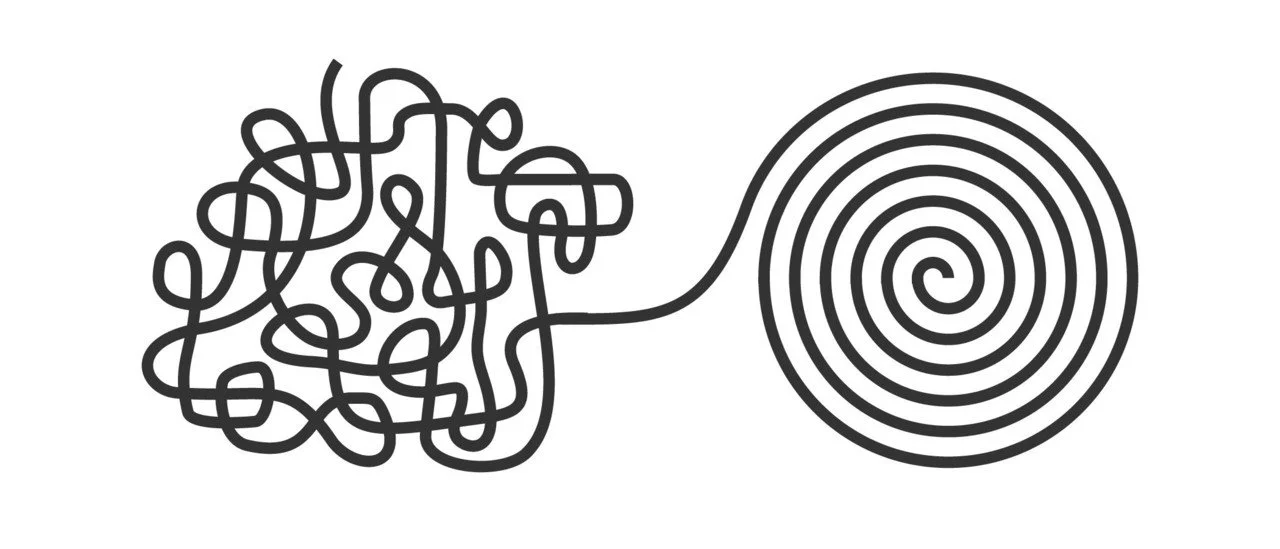
From both professional practice and research conducted in December 2024 (Tight Pants, Tough Minds), a different picture emerges. What many organisations are experiencing is not a lack of capability or effort, but a deeper issue of systemic misalignment.
This misalignment exists between:
Organisational expectations
Leadership behaviour
Workforce capability
Lived experience of work
And it is this misalignment that makes work feel unnecessarily difficult.
The Illusion of Busyness
One of the most visible indicators of organisational strain is constant busyness.
People are active throughout the day:
Attending meetings
Responding to emails
Completing tasks
Yet when asked what has been achieved, there is often uncertainty.
This is not a productivity issue—it is a clarity issue.
When priorities are unclear:
Effort becomes fragmented
Activity replaces impact
Progress slows despite increased effort
Over time, this creates a cycle of inefficiency where more effort is required to achieve less.
The Misalignment of People and Capability
A critical issue in many organisations is how people are deployed.
Rather than aligning individuals to roles that match their expertise, knowledge, and capability, organisations often:
Move people reactively
Fill gaps based on availability
Prioritise short-term fixes over long-term alignment
While this may appear flexible, it introduces significant inefficiency.
When individuals are not aligned to their strengths:
Tasks take longer
Decision-making slows
Confidence reduces
Rework increases
In contrast, strengths-based deployment enables:
Faster execution
Higher quality outcomes
Increased engagement
Reduced need for oversight
Efficiency is not achieved through redistribution alone—it is achieved through intentional alignment.
Leadership Communication: The Most Underused Lever
Leadership communication plays a critical role in organisational effectiveness.
Clear, consistent communication:
Creates alignment
Builds trust
Reduces ambiguity
Enables decision-making
However, in many organisations, communication becomes:
Reactive
Inconsistent
Overly complex
This creates noise rather than clarity.
When communication lacks clarity:
People fill gaps with assumptions
Effort becomes misdirected
Frustration increases
Leadership communication is not simply about sharing information—it is about creating shared understanding.
Trust, Inclusion, and Psychological Safety
Trust is the foundation of effective teamwork.
Psychological safety, defined by Edmondson (1999), enables individuals to:
Speak up
Challenge ideas
Admit mistakes
Contribute fully
Inclusion is often positioned as a programme or training initiative. But we must ask a critical question:
Is inclusion created through a one-day course?
Or is it created through everyday behaviour?
In reality:
Inclusion is experienced, not delivered
Trust is built through consistency, not intention
Psychological safety is shaped by leadership behaviour
When these elements are absent:
People disengage
Accountability reduces
Collaboration declines
Survival Mode: The Shift from “We” to “I”
Under sustained pressure, individuals enter a state of heightened stress.
From a psychological perspective, this is often described as a fight or flight response.
In this state:
Cognitive capacity is reduced
Emotional regulation is impaired
Behaviour becomes reactive
Most importantly:
Collaboration decreases.
People shift from:
Collective thinking (“we”)
ToSelf-preservation (“I”)
This is not a failure of character.
It is a response to the environment.
When Support Becomes Pressure
Organisations frequently introduce “support plans” to address performance or attendance concerns.
However, these are often implemented in situations where individuals are already experiencing difficulty, such as:
Returning from absence
Managing personal challenges
Experiencing workplace conflict
While labelled as support, these plans often:
Include performance expectations
Carry consequences
Increase scrutiny
As a result, they are often experienced as pressure rather than support.
This has unintended consequences:
Reduced openness
Increased anxiety
Lower trust
True support requires understanding context, not just measuring output.
The Erosion of Work-Life Balance
Work-life balance is rarely removed explicitly.
Instead, it is gradually eroded through behaviour.
Examples include:
Out-of-hours communication
Implicit expectations of availability
Recognition of overwork
Lack of boundary-setting
Over time, this creates a culture where:
Rest is undervalued
Boundaries are discouraged
Overwork is normalisedc v
From a psychological perspective, sustained overwork leads to:
Reduced cognitive function
Increased emotional strain
Higher risk of burnout
Wellbeing as a System Outcome
Wellbeing is often approached as a programme:
Workshops
Campaigns
Initiatives
However, wellbeing is not created through isolated interventions.
It is a system outcome.
It emerges from:
Leadership behaviour
Organisational culture
Clarity of roles
Alignment of expectations
When these elements are aligned:
Wellbeing improves naturally
When they are not:
Wellbeing initiatives have limited impact
A Shift in Thinking: From Activity to Alignment
The key insight is this:
Work is not hard because people are incapable.
Work becomes hard when the system creates unnecessary complexity.
To address this, organisations must shift focus from:
Increasing activity
ToImproving alignment
What Leaders Need to Do Differently
Clarify priorities
Define what matters most and align all activityAlign people to strengths
Deploy expertise intentionallyImprove communication
Focus on clarity, consistency, and purposeBuild trust through behaviour
Not through programmes aloneEmbed wellbeing into practice
Design work environments that support sustainability
Organisations in crisis often respond by increasing effort.
But effort alone is not the solution.
The solution lies in alignment.
By aligning:
Priorities
QPeople
Leadership behaviour
Organisational systems
Organisations can move from: Reactive survival To Sustainable performance